Concept Exploration
American Currency Redesign
A Pocket-Sized Monument
Reimagining the United States banknote not just as secure tender, but as a modern artifact.
The American dollar is more than an instrument of commerce; it is a pocket-sized monument. For generations, our currency has remained largely static, a canvas of green and black that speaks to our history but rarely reflects the vibrant, diverse, and forward-looking nation we have become.
In this redesign concept, I set out to reimagine the United States banknote not just as a secure tender, but as a modern artifact. By shifting to a vertical orientation, we acknowledge how currency is actually handled, exchanged, and stored in the modern era—designed for hands and wallets rather than horizontal cash registers.
The introduction of a broader, more deliberate color palette serves a dual purpose: significantly enhancing accessibility for the visually impaired while celebrating the breathtaking natural heritage and profound cultural milestones that define the American experience.
These designs are an exploration of what it means to hold value in your hands—a blend of cutting-edge security features, minimalist typography, and historical reverence, updated for the 21st century.
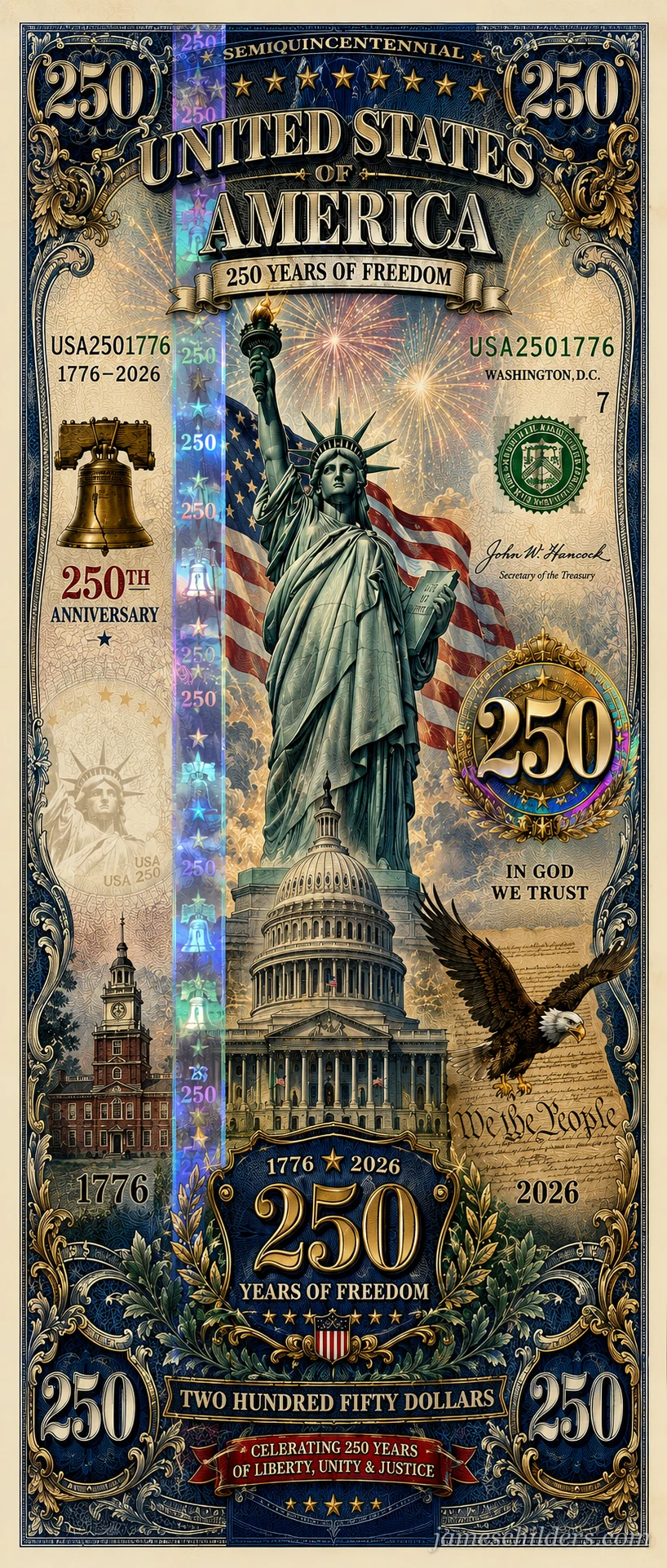
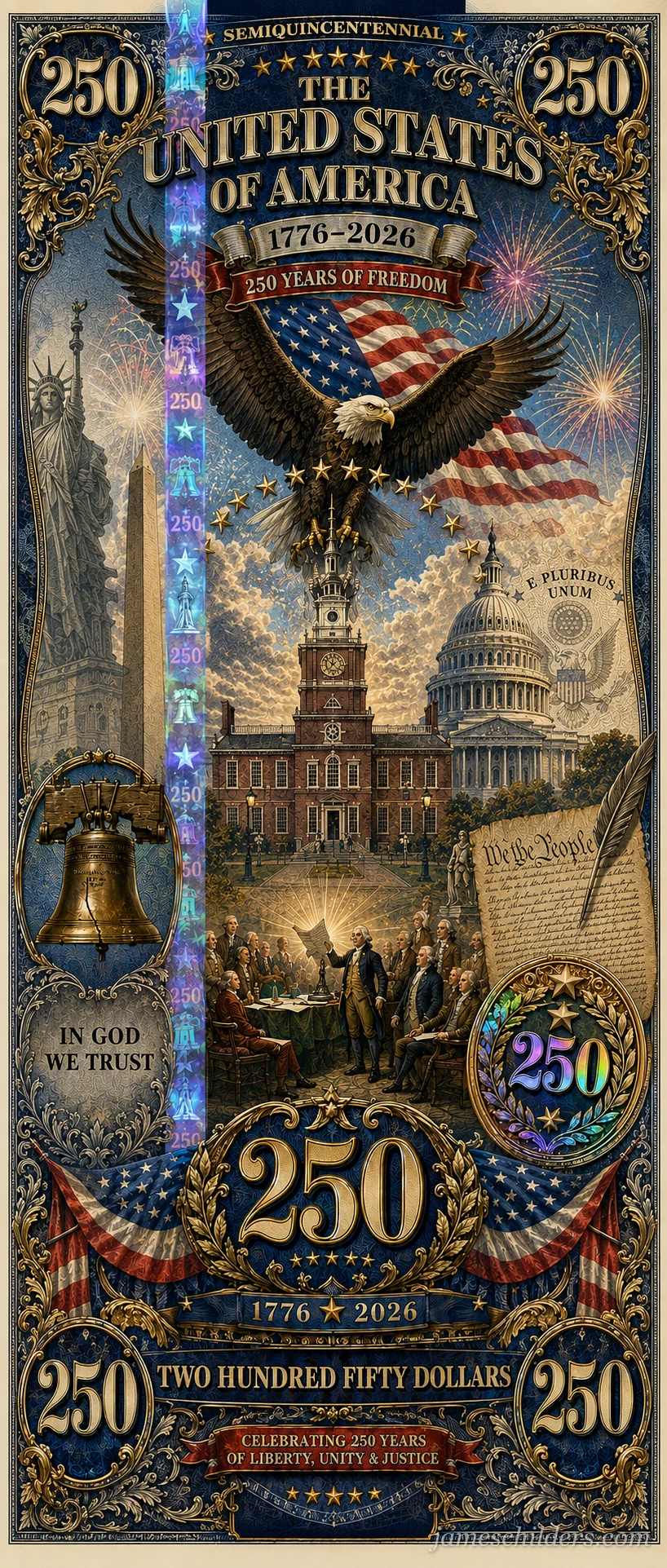
$250 Commemorative Bill Concept
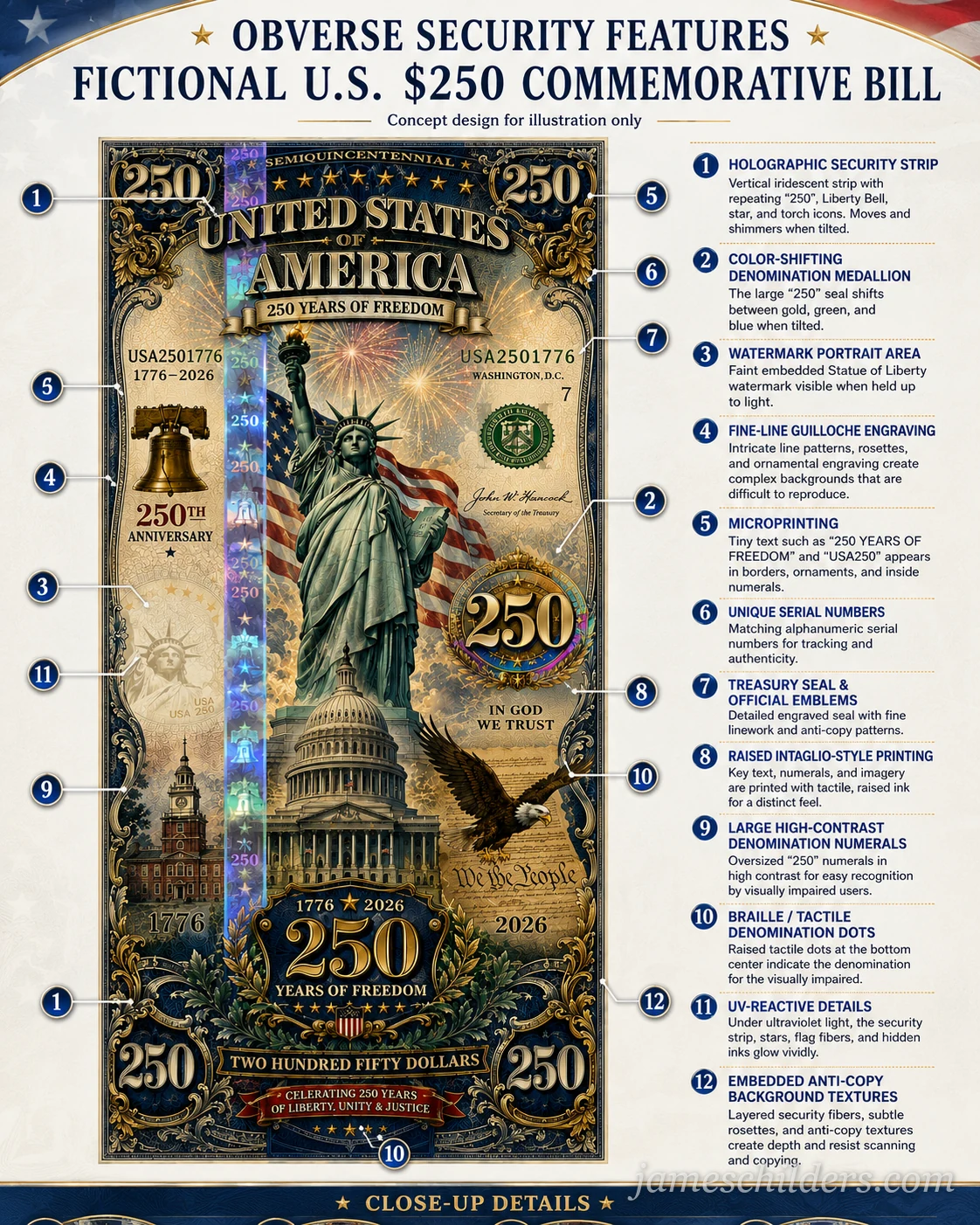
There has been a lot of talk lately about putting Donald Trump on a $250 bill. Exploring this concept provided a unique canvas to weave together foundational American symbols—from the Statue of Liberty to the Capitol—into a unified, modern aesthetic. I wanted to design a piece that felt monumental, serving as a tribute to the nation's enduring heritage while pushing the boundaries of traditional banknote composition. Security features became part of the educational design as well.
Security Features & Design Details
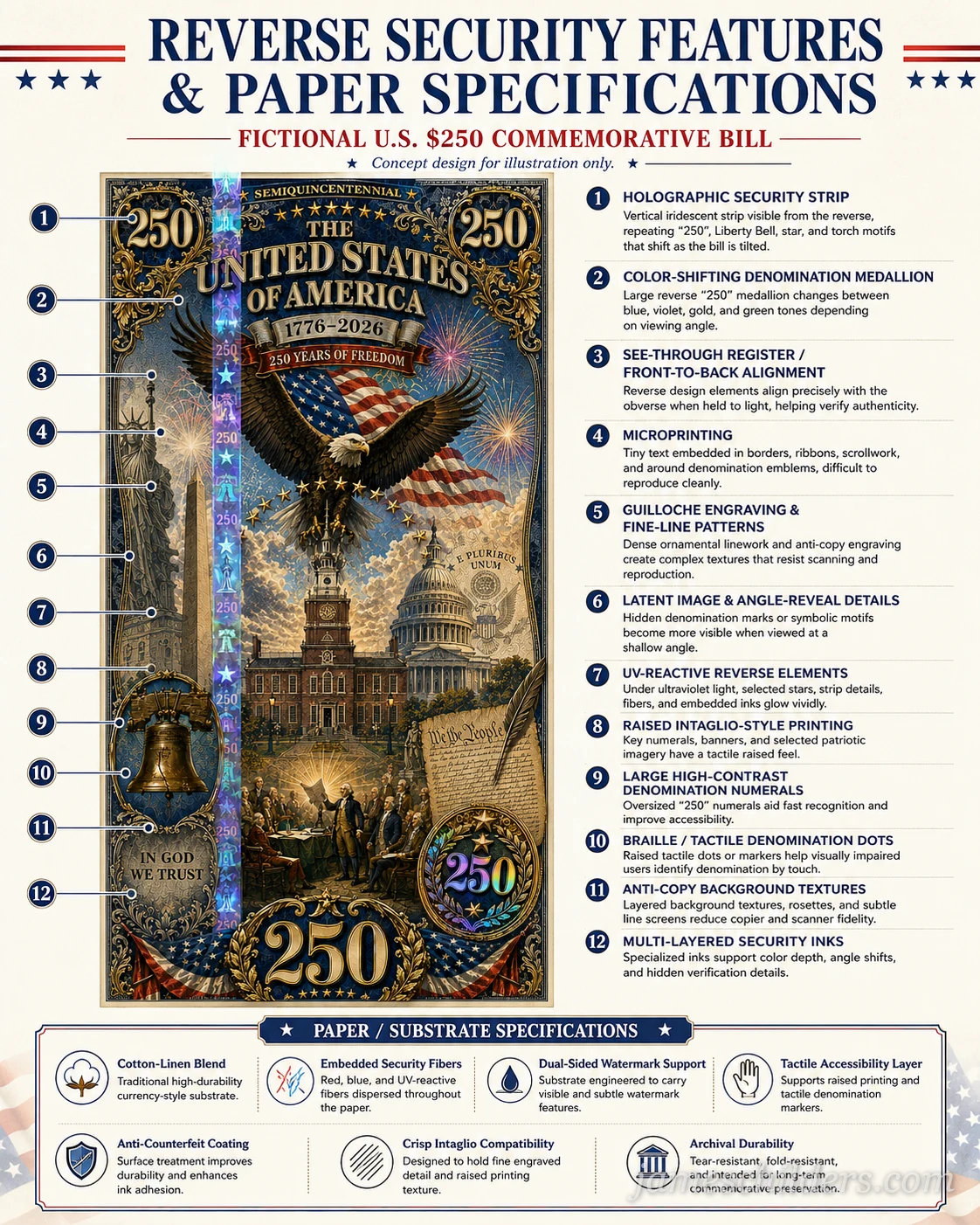
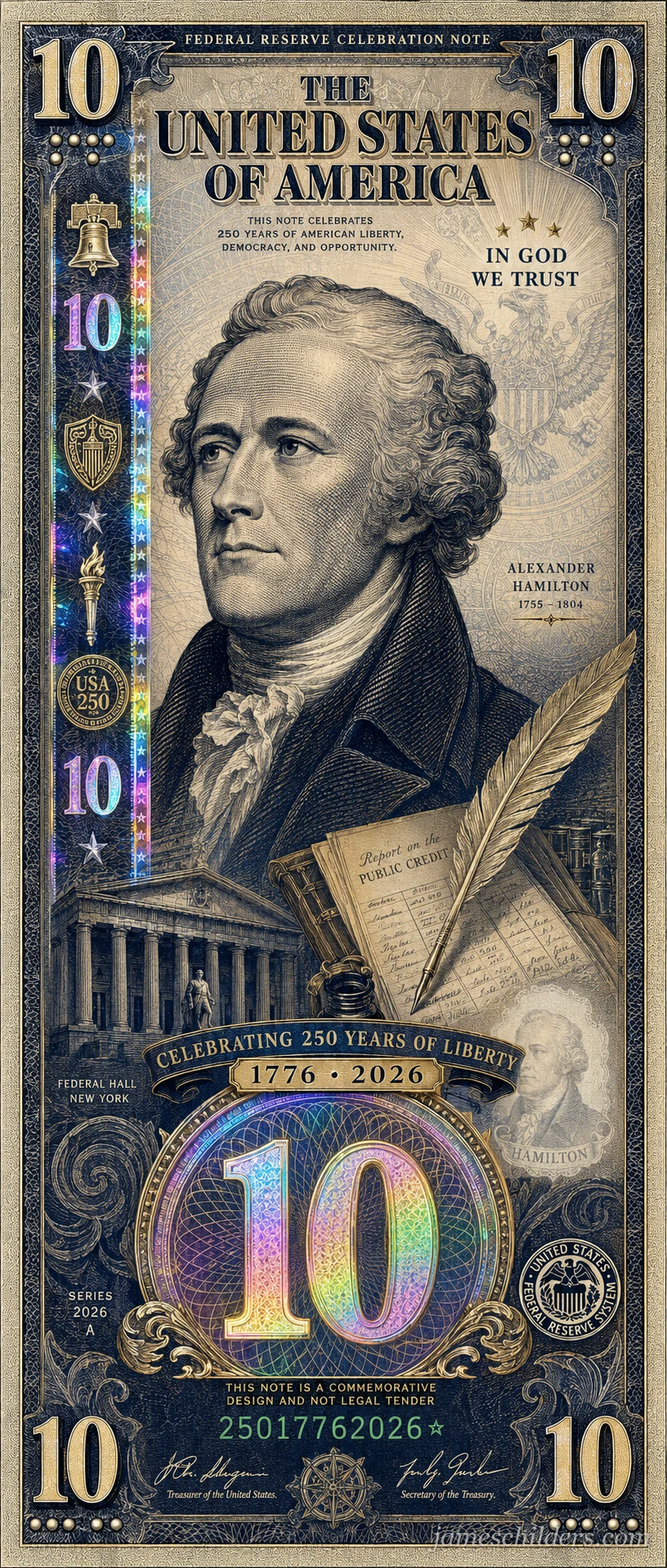
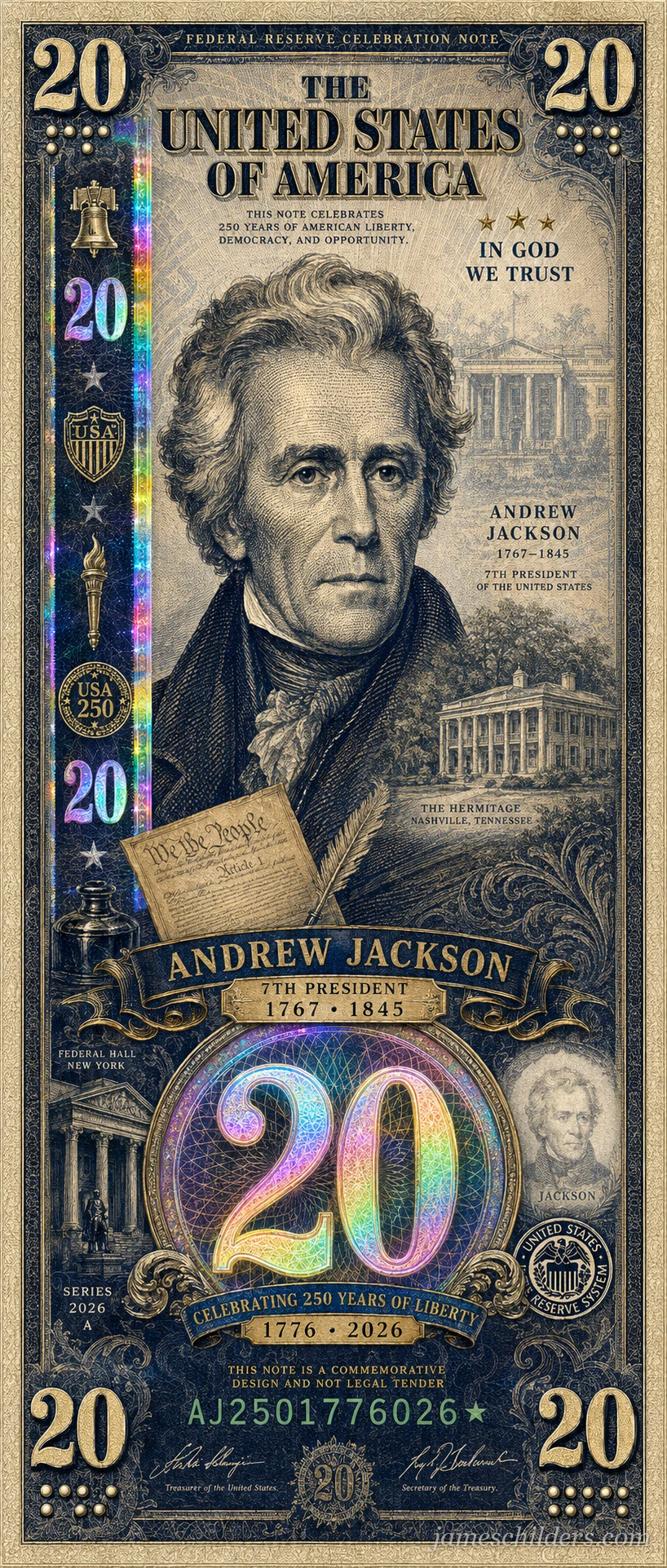
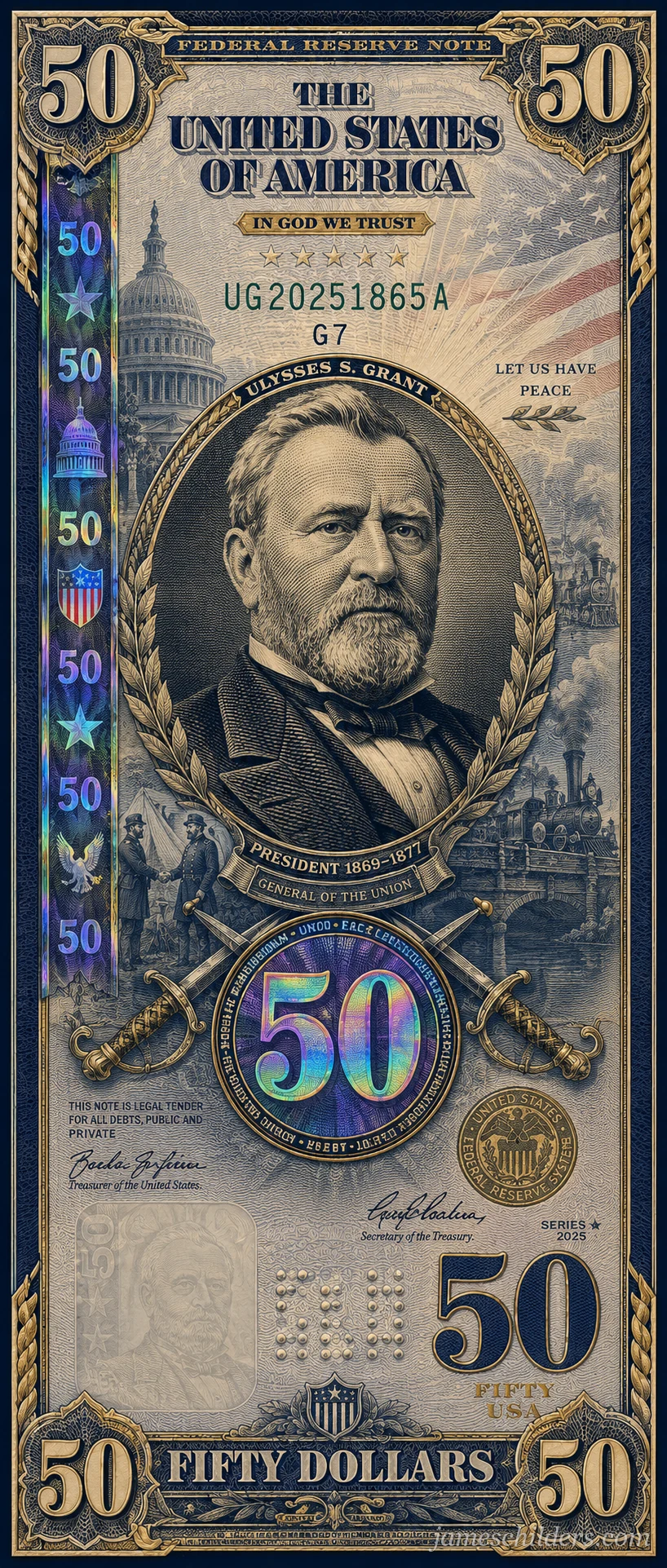
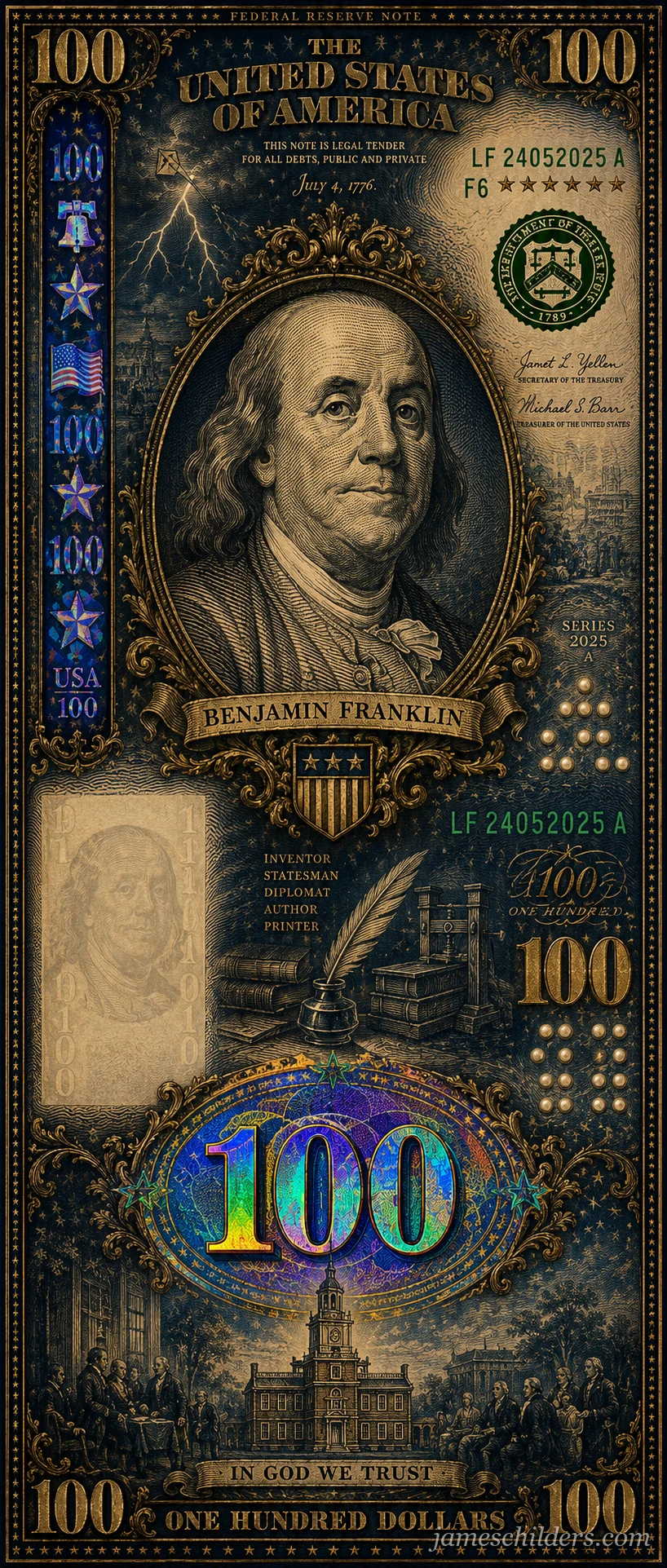
In this fictional series, the security features are not hidden afterthoughts. They are part of the message. The obverse and reverse sides include layered anti-counterfeit concepts such as holographic seals, color-shifting ink, microprinting, embedded security threads, raised tactile printing, transparent windows, watermark-style portraits, fine-line engraving, and intricate background patterns.
We also added accessibility features, including large denomination numbers and Braille-style tactile dots for the visually impaired. That matters. If currency is supposed to serve the public, then the public includes people with low vision, blindness, aging eyesight, and other accessibility needs. A modern American currency concept should be beautiful, secure, educational, and usable.
Reimagining the Obverse
The obverse of American currency has long served as a portrait gallery of the nation's history—each bill a carefully composed study of leadership and legacy. Our redesign preserves this essential identity while reimagining its presentation.
By transforming the traditional horizontal composition into a vertical format, we create space for a more intimate and educational experience. The familiar portraits remain at the heart of each design, instantly recognizable and deeply rooted in American tradition. Yet around them, we weave enhanced storytelling imagery—historical moments, symbolic elements, and visual narratives that deepen the connection between the figure and the nation's story.
This vertical orientation also allows us to integrate modern security features seamlessly—holographic elements, advanced color-shifting inks, and tactile details that protect against counterfeiting while remaining elegant and unobtrusive. Accessibility features are woven throughout: enhanced contrast, larger typography, and textured elements ensure that every citizen can engage with their currency with confidence and ease.
The result is a collection of bills that feel contemporary and meaningful—designs that honor the past while speaking to the present. Modern in execution, yet unmistakably connected to the currency Americans have known for generations.
$1 Bill Concept
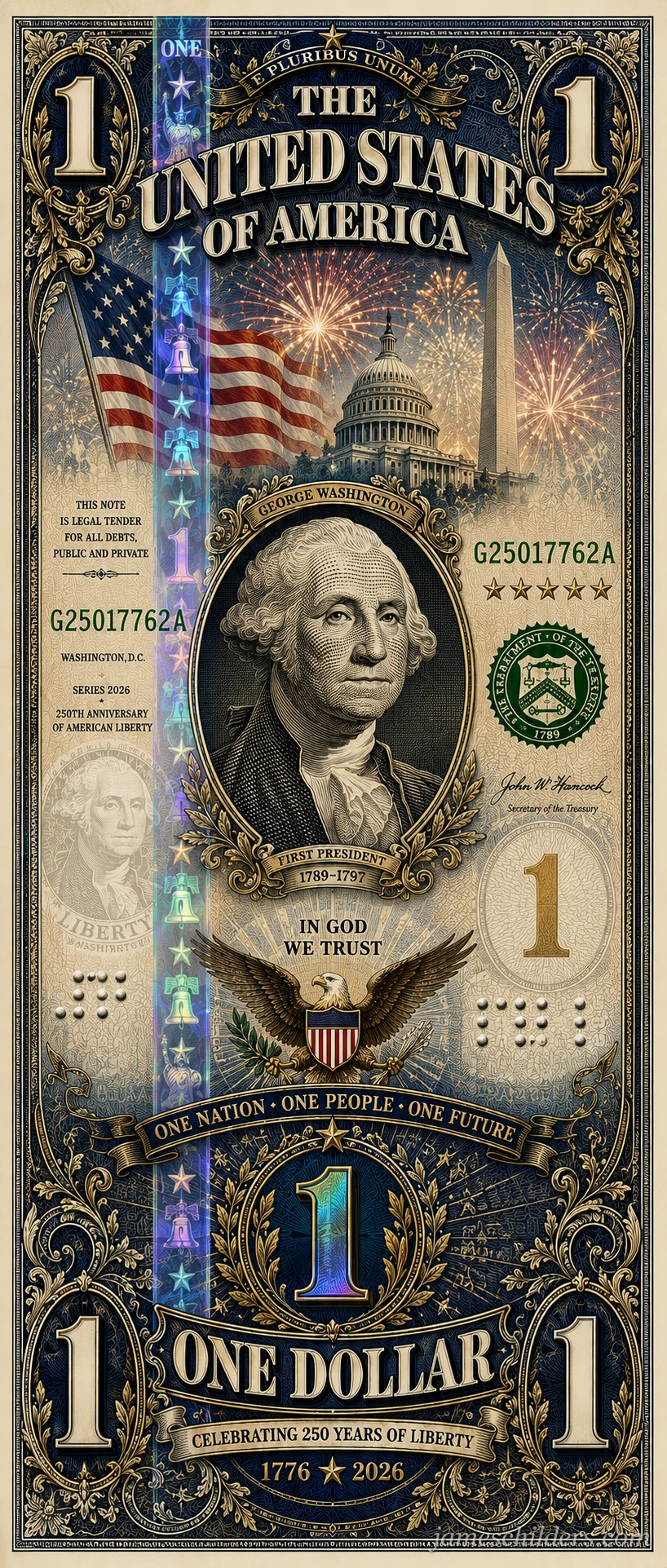
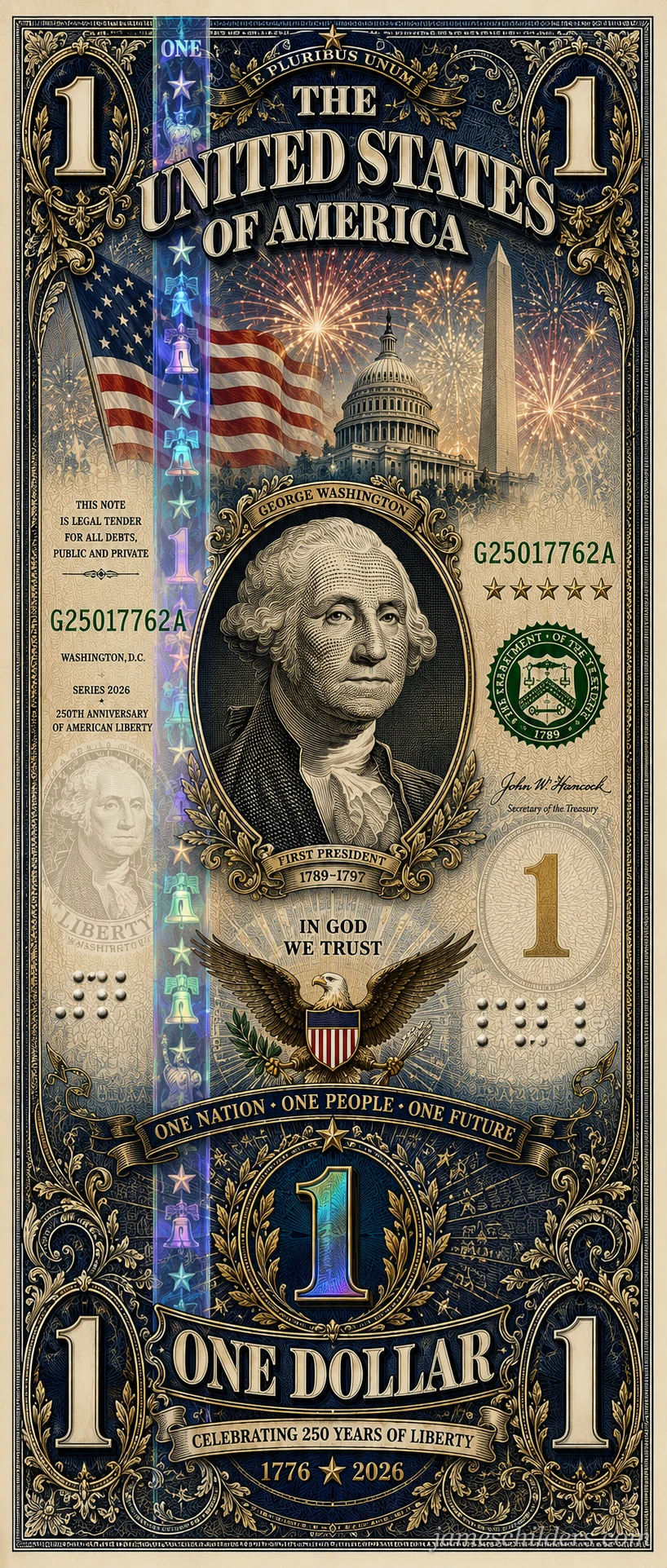
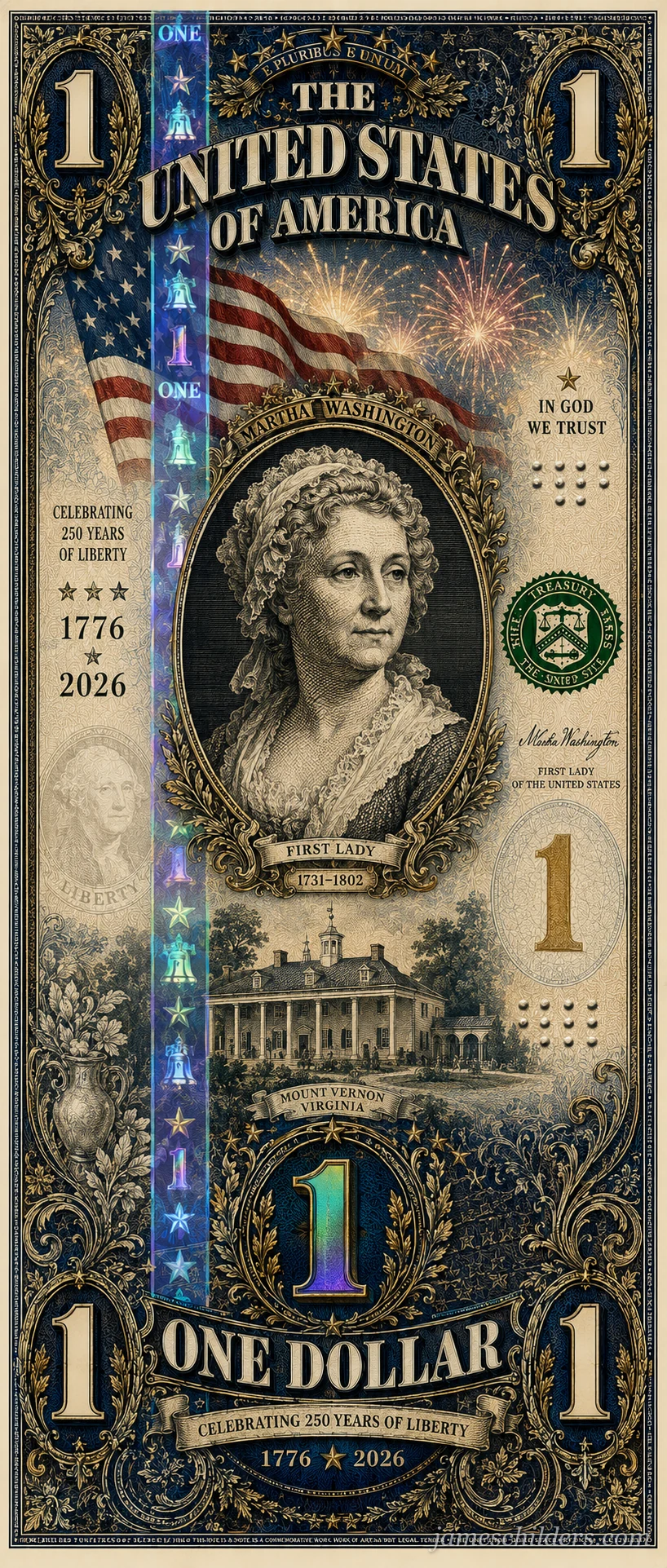
From there, the project expanded. The $1 bill is the foundation of American currency, the most circulated and recognizable banknote in the world. Redesigning it requires balancing profound historical legacy with modern security needs and artistic progression.
This concept maintains George Washington as the anchor of our currency while introducing a vertical format. As an alternate exploration, I designed a version featuring Martha Washington—the only woman to have ever appeared on a primary U.S. banknote (the $1 Silver Certificate in 1886).
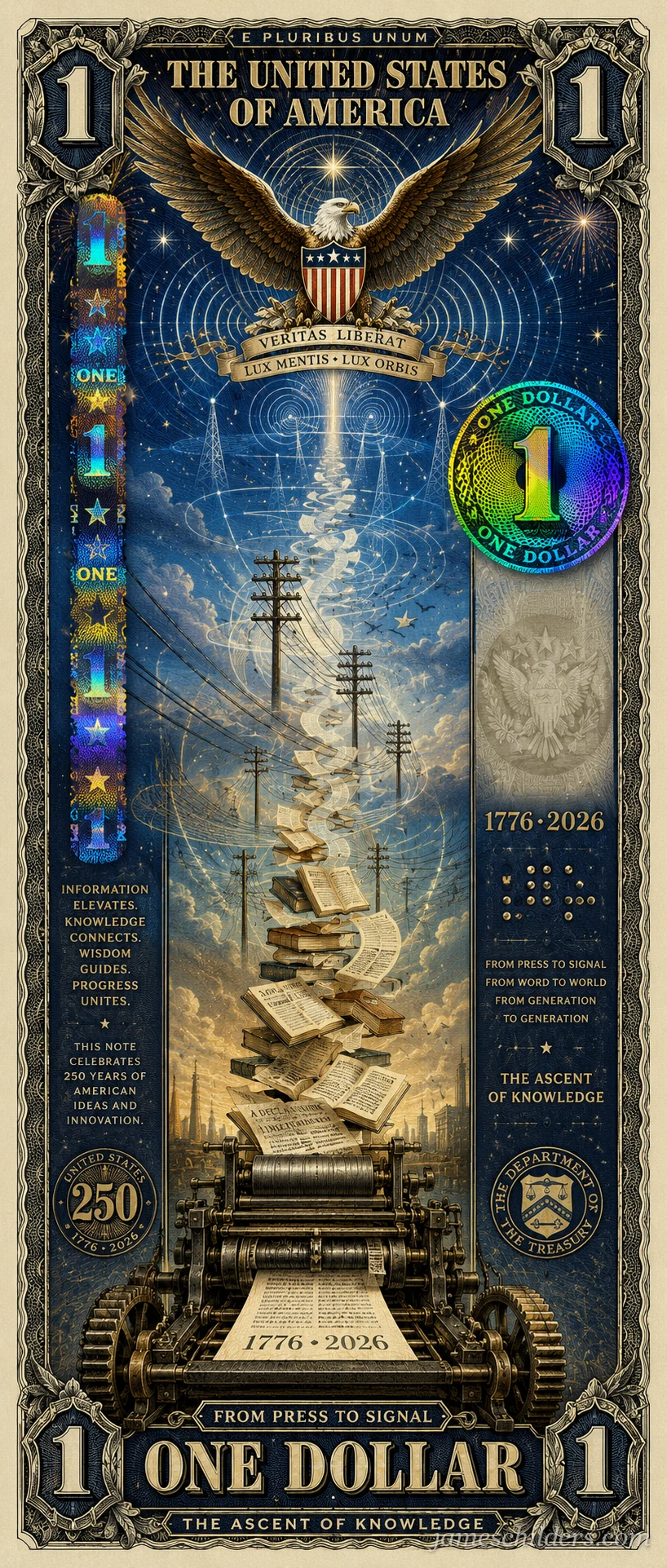
The reverse side, titled “The Ascent of Knowledge,” celebrates the American spirit of innovation, depicting the evolution of communication and progress from the printing press to modern transmission infrastructure. It is a testament to the enduring values passed down from generation to generation.
$5 Bill Concept
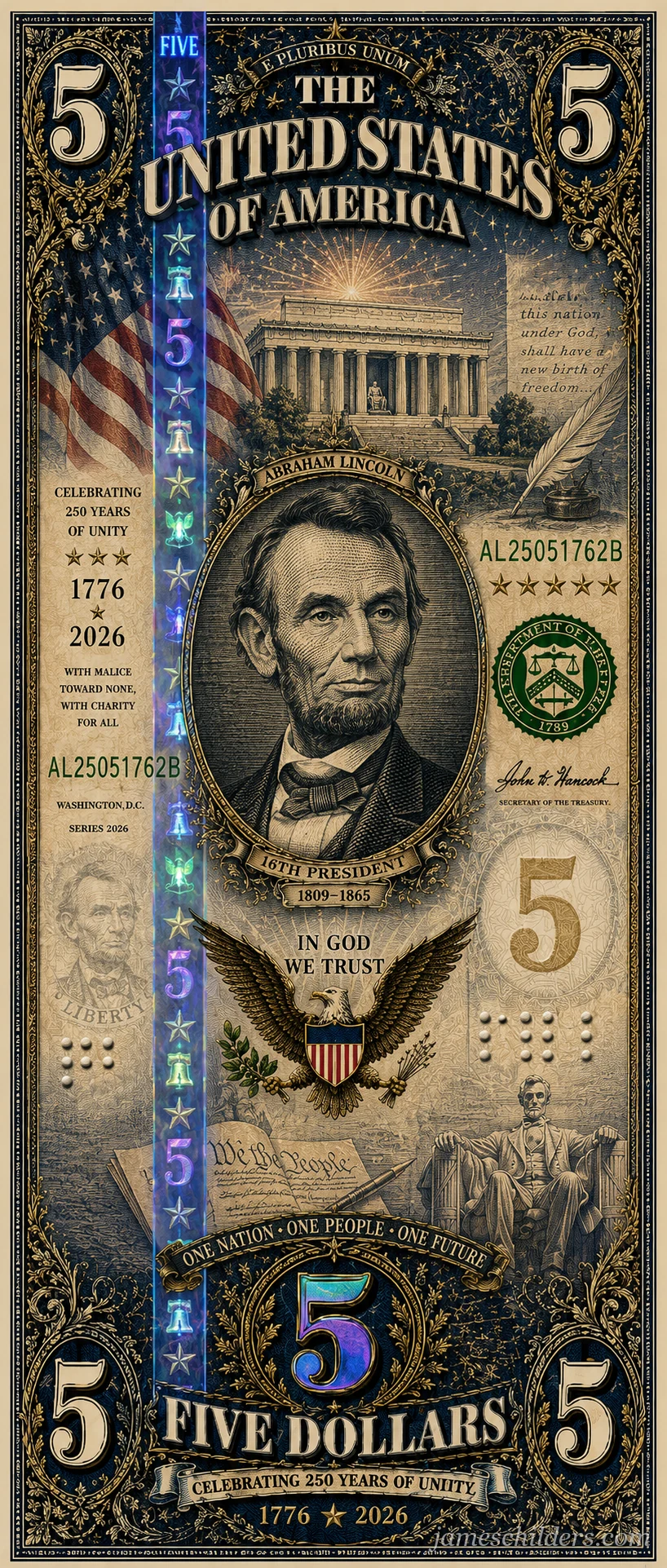
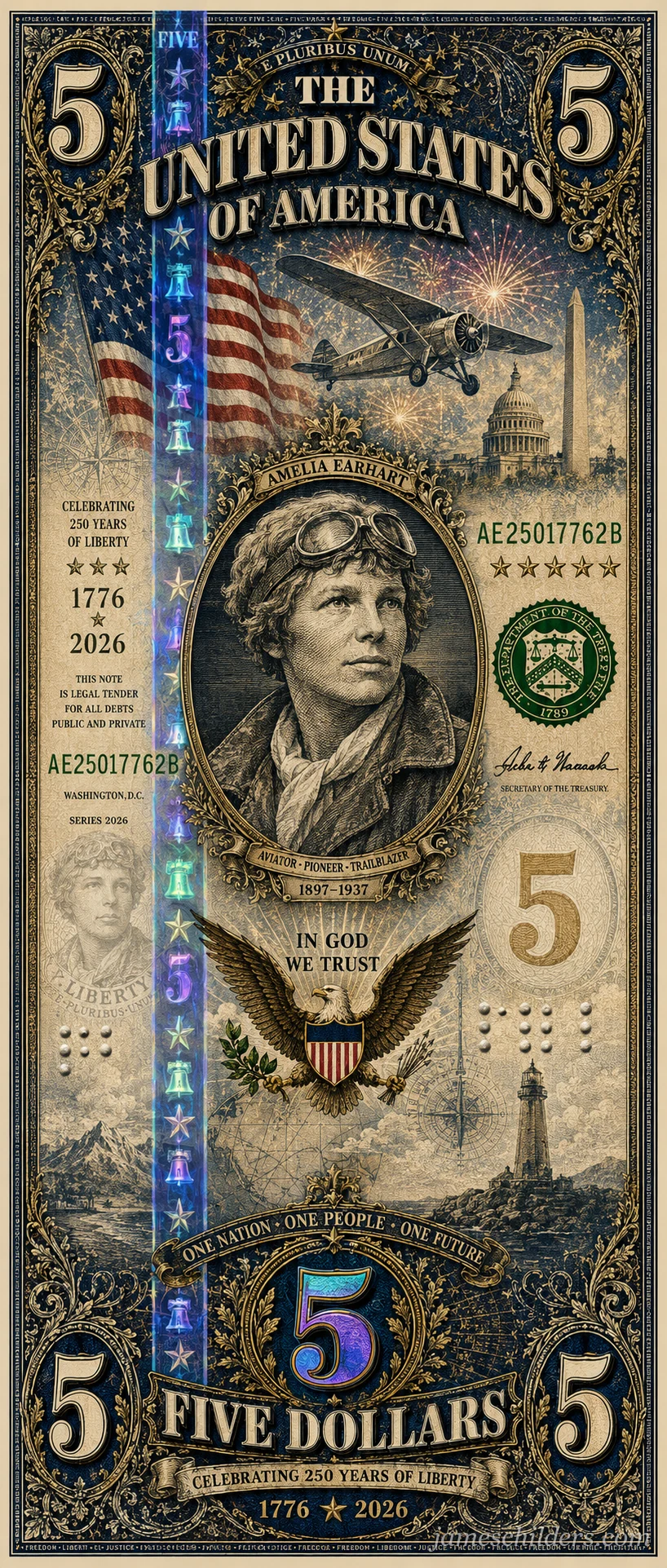
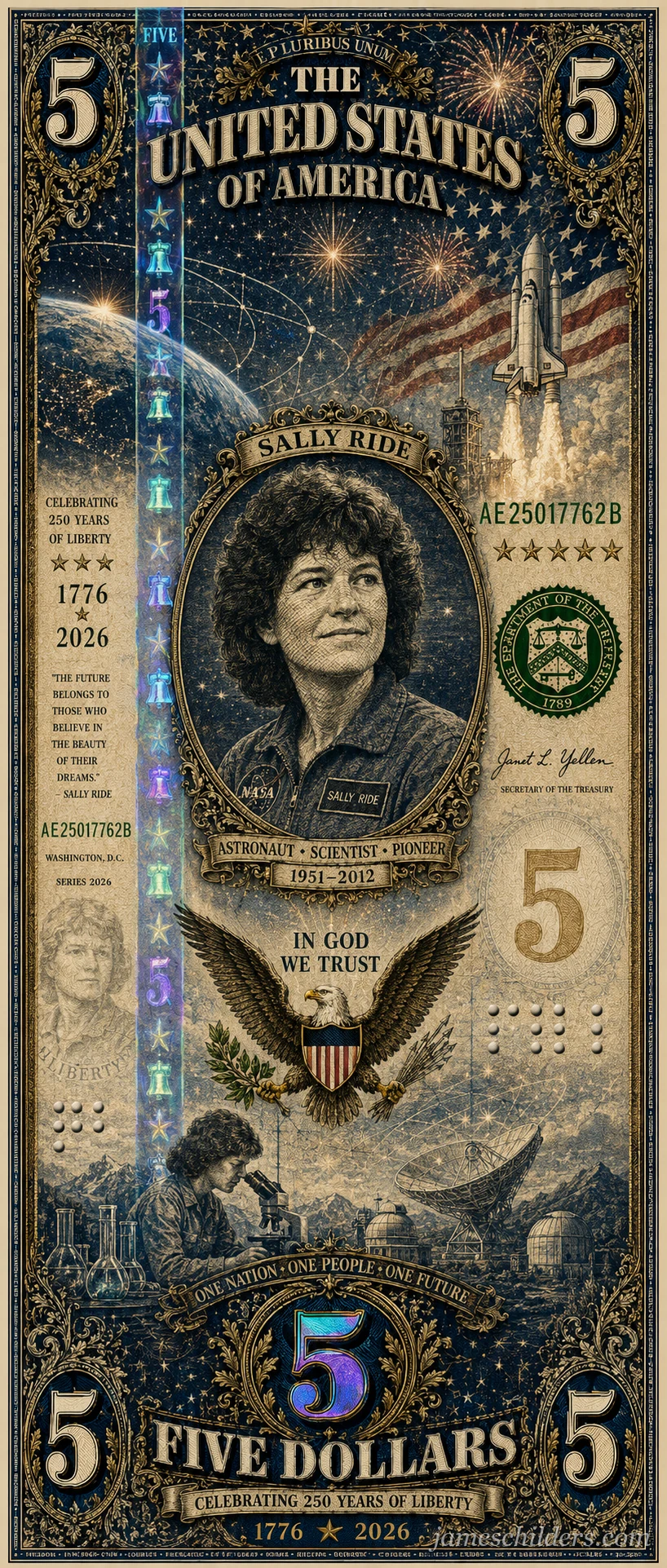
For the $5 bill, the focus shifts to exploration and scientific achievement. The obverse designs honor two of America's greatest pioneers of the skies and space: Amelia Earhart and Sally Ride. Their courage and determination expanded the boundaries of human potential and inspired generations to look upward.
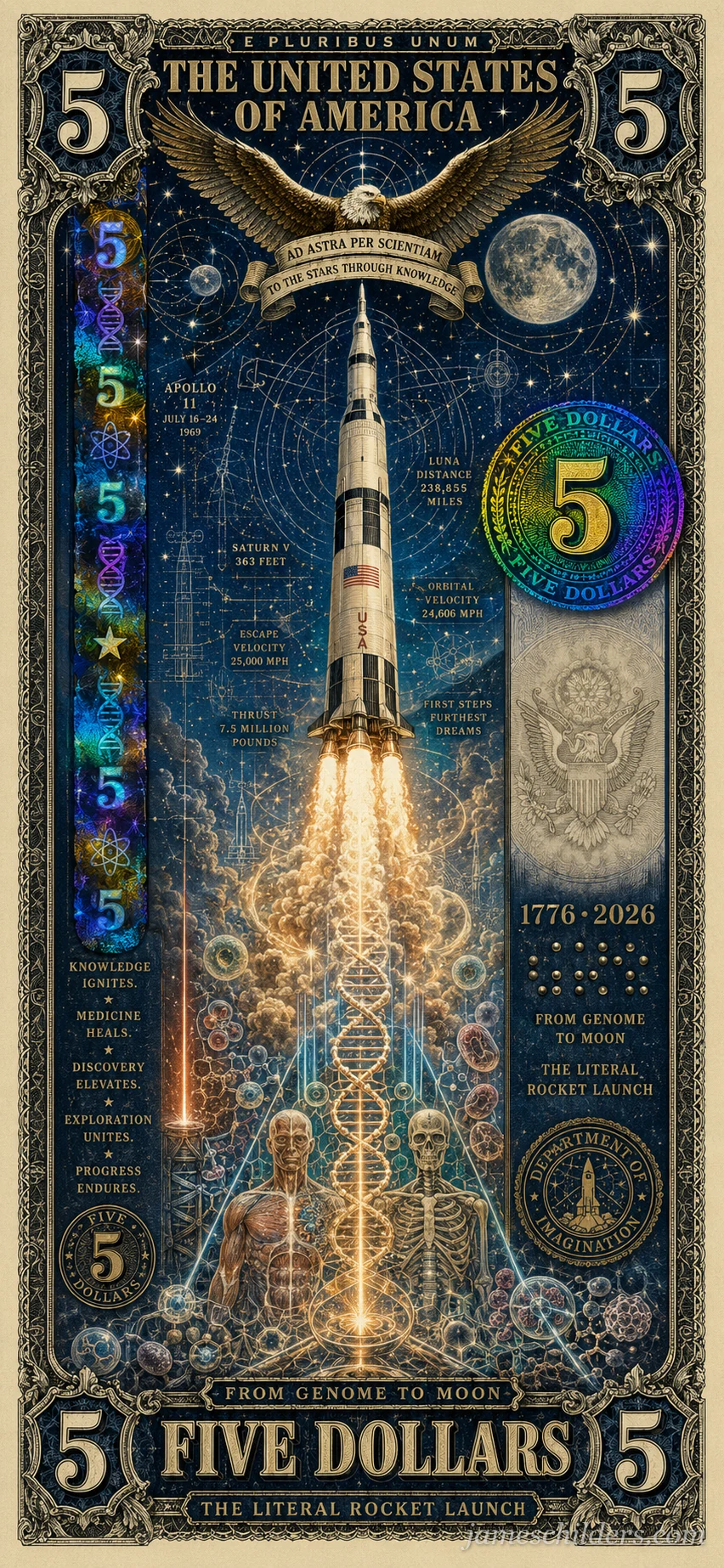
The reverse side, titled “From Genome to Moon,” celebrates the breadth of American scientific discovery. It bridges the microscopic world of genetics with the monumental achievement of space exploration, symbolizing our relentless pursuit of knowledge and our drive to explore the unknown.
$10 Bill Concept
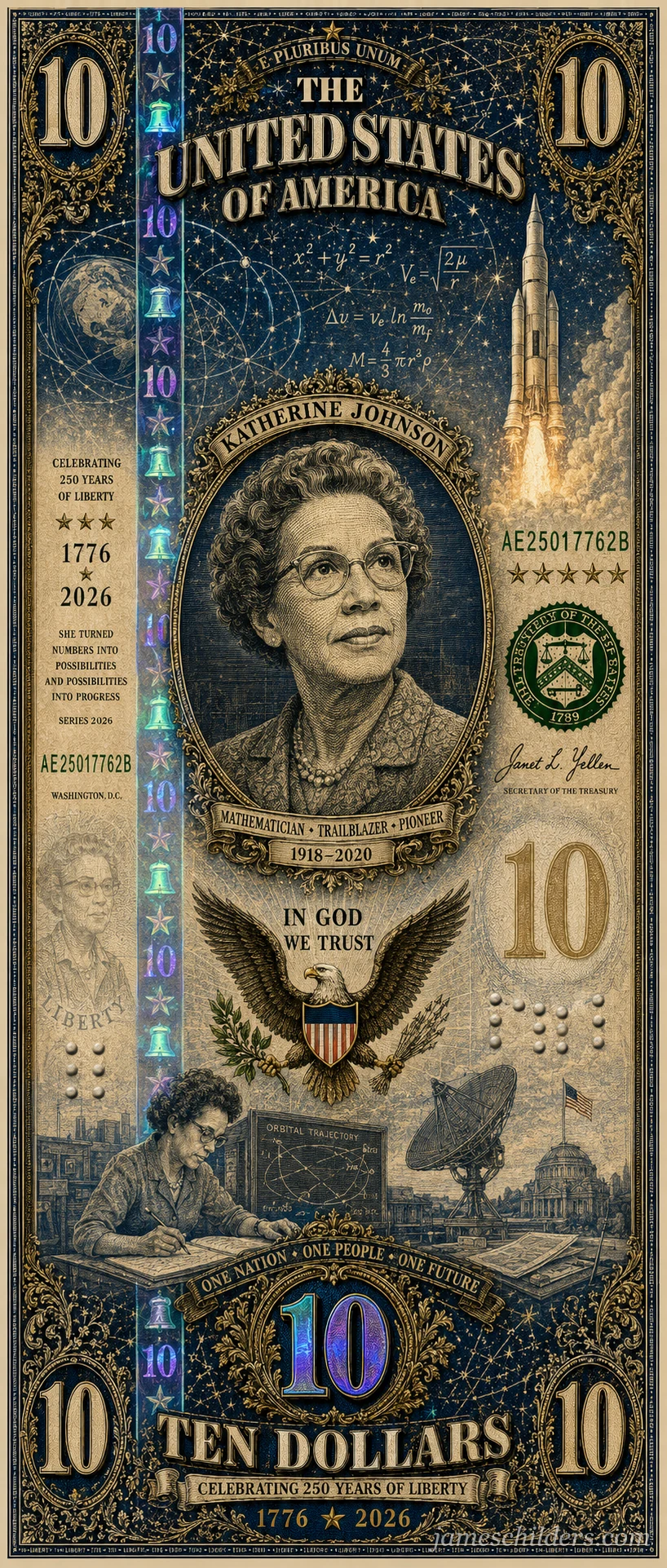
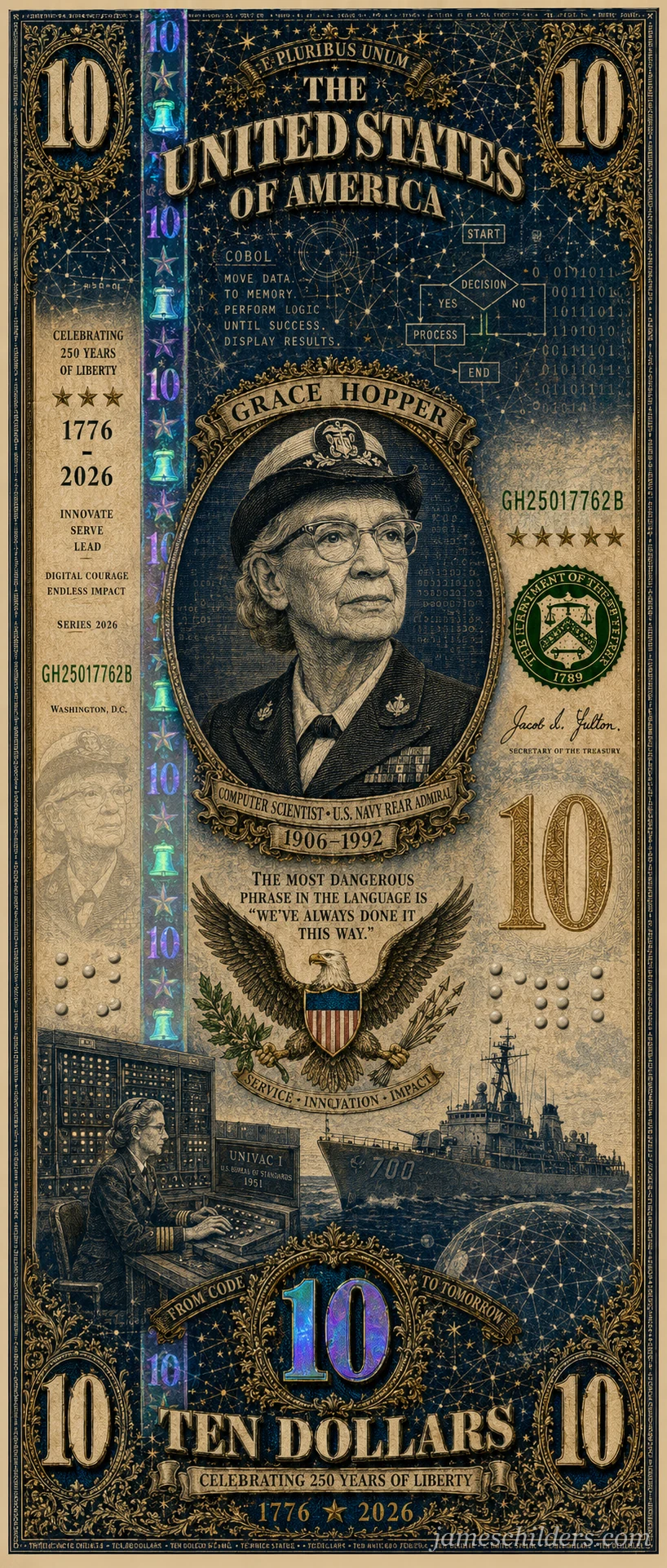
This $10 bill concept explores the brilliant minds that propelled American technology and computation into the modern era. Focusing on innovation that reshaped our understanding of science and code, these designs offer two distinct obverse options that honor pioneers who transformed the future of the nation and the world.
Together, the two options represent different sides of American ingenuity. While Johnson looked up to plot our course through the cosmos, Hopper looked inward to build the digital architecture that now runs the modern world. Both are portraits of visionaries—people who see a future others have not yet imagined.
Katherine Johnson Obverse - Mathematics, Spaceflight, and Discovery
The Katherine Johnson obverse celebrates the mathematical genius whose calculations were critical to the success of the first U.S. crewed spaceflights. Her portrait is encircled by orbital equations, intricate trajectory diagrams, and soaring rocket imagery that map humanity's ascent to the stars. Subtle depictions of satellites and a dynamic launch scene underscore her pivotal role in space exploration. A defining quote anchors the design: “She turned numbers into possibilities and possibilities into progress.”
Grace Hopper Obverse - Computing, Innovation, and the Digital Future
The Grace Hopper obverse honors the pioneering computer scientist who transformed programming. Her portrait is set against a backdrop of flowing binary code, early computing equipment, and structured flowcharts, nodding to her creation of the first compiler and her influence on COBOL. Naval imagery pays tribute to her dedicated service as a Rear Admiral. Anchoring this design is her famous quote: “The most dangerous phrase in the language is ‘we’ve always done it this way.’” The overarching messaging, “From Code to Tomorrow,” reflects how her innovations laid the foundation for the digital future.
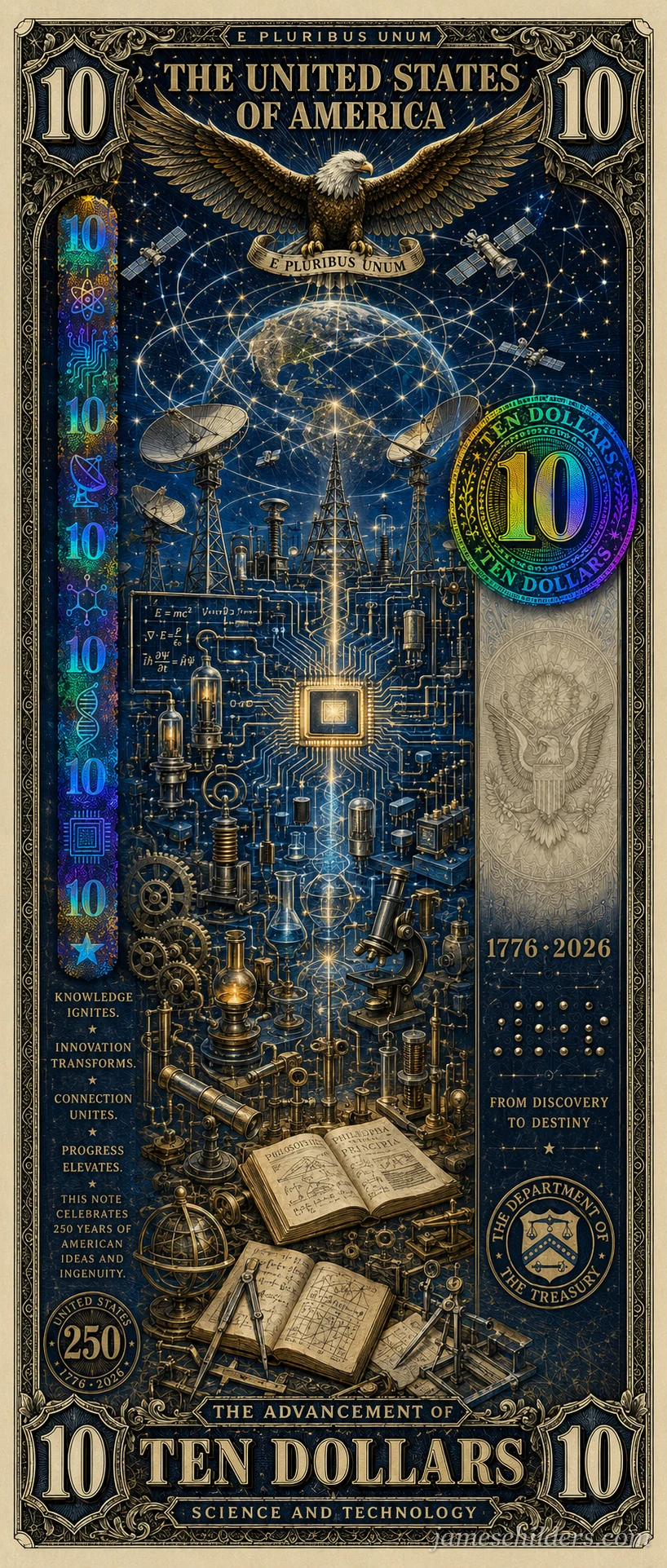
$10 Reverse - The Advancement of Science and Technology
The reverse side visually chronicles human progress. It begins at the base with the foundation of learning—books, sketches, and analog tools—transitioning upward through the spark of electricity and intricate circuitry. At the center sits a glowing microchip, branching out toward modern communication towers and orbiting satellites. A majestic American eagle watches over this evolution. Interwoven throughout is the message: “Knowledge ignites. Innovation transforms. Connection unites. Progress elevates.”
Security and accessibility
The security features are deeply integrated into this narrative, including a holographic strip with tens, atomic symbols, circuit patterns, satellite imagery, DNA strands, stars, and a microchip icon. A circular hologram and watermark-style eagle provide robust anti-counterfeiting measures, alongside tactile dots for accessibility and historical “1776–2026” markings. Ultimately, this vertical format acts as a timeline of discovery, leading the eye upward from our foundational roots to our limitless future.
$20 Bill Concept
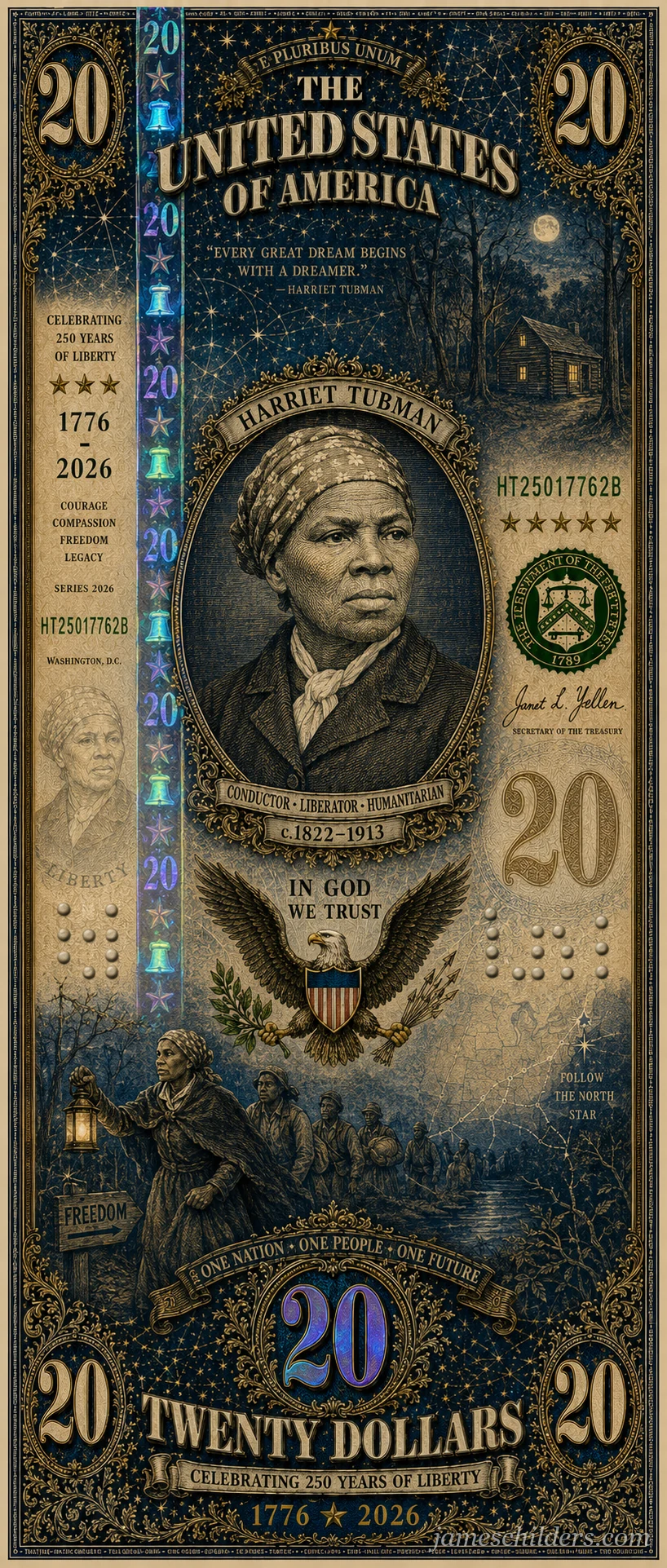
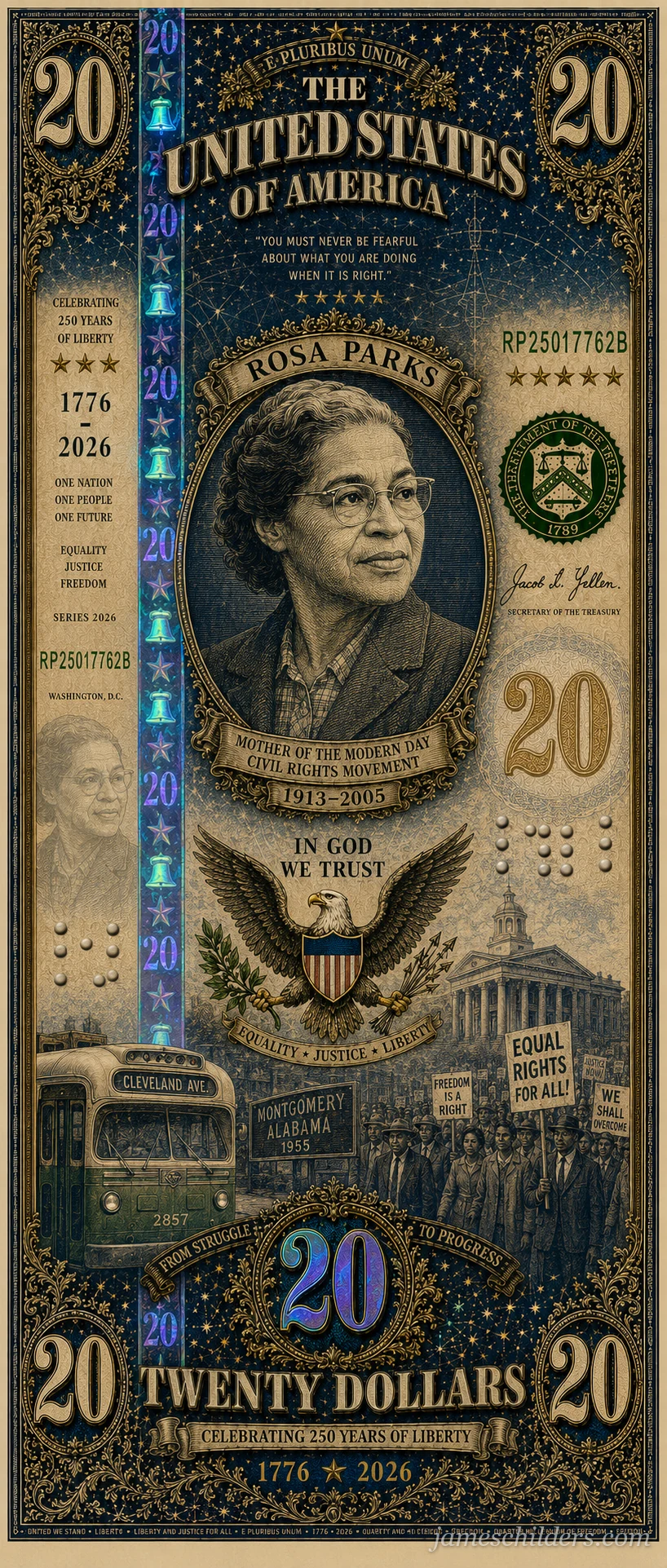
This $20 bill redesign concept centers on the profound and enduring American themes of freedom, equality, courage, and justice. To embody these principles, the concept introduces two extraordinary women who irrevocably altered the course of history—Harriet Tubman and Rosa Parks—as the two obverse options.
Together, the two obverse options present distinct facets of the American journey toward justice. While Tubman represents the sheer courage of physical escape and liberation from absolute bondage, Parks represents the resolute refusal to yield and the demand for equal dignity in public life. The choice between them highlights different design goals: honoring the raw fight to survive against tyranny, versus celebrating the civic stand that ignited the modern civil rights movement.
Harriet Tubman Option
Honoring the “Conductor • Liberator • Humanitarian,” this concept captures the immense emotional weight of escape and the undeniable courage required to seek freedom. The composition evokes the night sky illuminated by the guiding North Star, a dense forest, a solitary cabin, and the hidden paths of the legendary Underground Railroad. Anchored by the inspiring quote, “Every great dream begins with a dreamer,” this design fundamentally represents freedom before freedom was protected by law—when it had to be seized in the dark.
Rosa Parks Option
Celebrating the “Mother of the Modern Day Civil Rights Movement,” this option explores the undeniable power of civil rights and peaceful resistance. The artwork features the iconic Montgomery bus, the Cleveland Avenue sign, protest signs, dedicated marchers, and a courthouse. Centered around her resolute quote, “You must never be fearful about what you are doing when it is right,” this concept represents freedom being tested, demanded, and affirmed under the law.
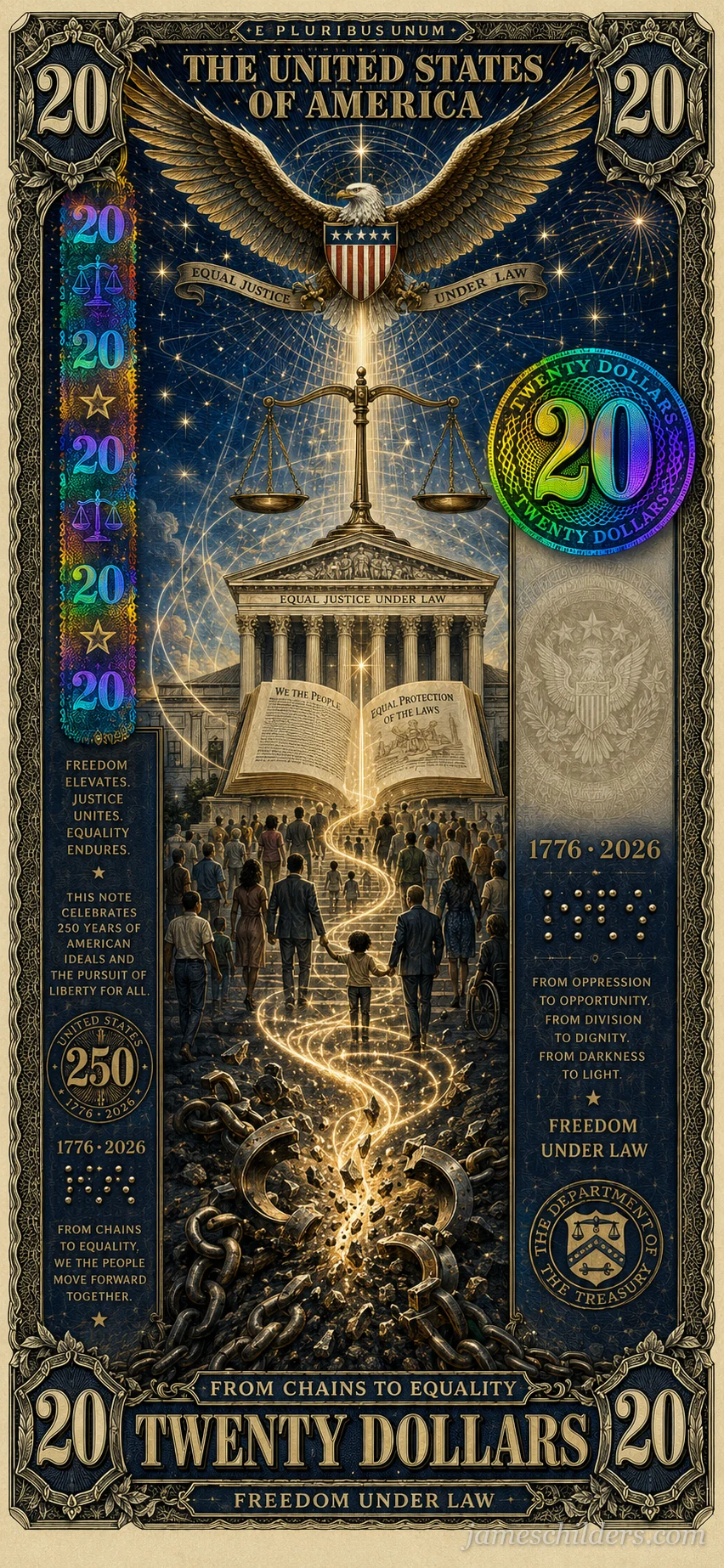
$20 Reverse - “From Chains to Equality — Freedom Under Law”
The reverse design illustrates a powerful vertical narrative journey spanning from struggle to justice. Beginning at the bottom, broken chains give way to a guiding path of light, depicting people walking steadily toward the Supreme Court. Open foundational books proudly display the phrases “We the People” and “Equal Protection of the Laws.” Above this ascent, the Supreme Court building and the scales of justice stand alongside a majestic American eagle. The civic language woven into the design reinforces this monumental progression: “Freedom elevates. Justice unites. Equality endures.” Alongside these words is the profound journey inscribed on the bill: “From oppression to opportunity. From division to dignity. From darkness to light.”
$50 Bill Concept
This $50 bill concept bridges the brilliance of modern communication and systems engineering with the enduring structure of the American constitutional framework. It honors the visionaries who built the networks that connect us, paired with the foundational systems that govern us.
Together, these two options recognize women whose systemic and mathematical brilliance shaped the modern technological landscape, proving that innovation requires both imaginative vision and disciplined execution.
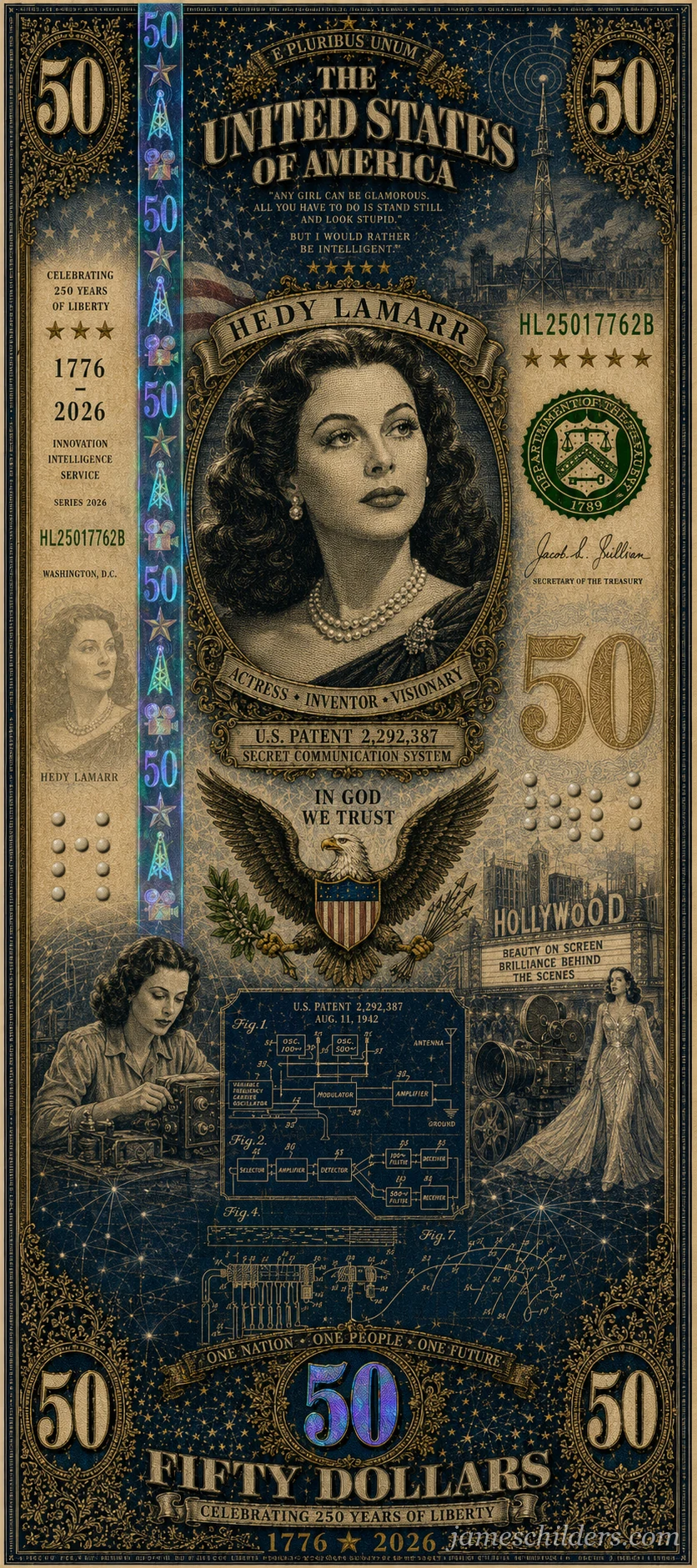
Hedy Lamarr Option
Honoring the inventor and actress whose co-invention of frequency-hopping spread spectrum technology laid the groundwork for modern wireless communication. This obverse option features her portrait surrounded by intricate wireless signal motifs, radio wave diagrams, and conceptual schematics that celebrate her undeniable contribution to modern connectivity and security.
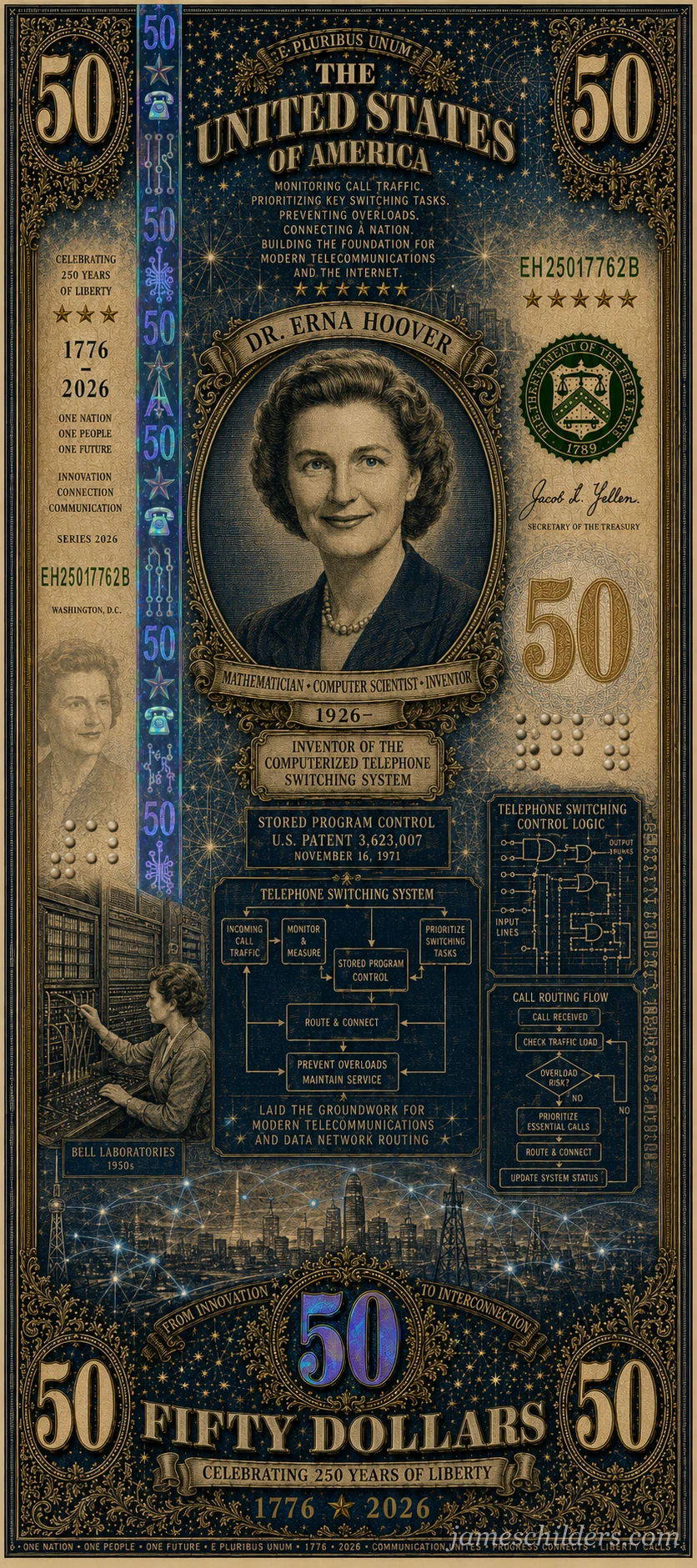
Dr. Erna Hoover Option
Celebrating the mathematician and pioneer who invented a computerized switching system for telephone traffic, revolutionizing modern communication networks. This alternate obverse concept surrounds Dr. Hoover with network graph imagery, switching relays, and modern computational motifs, recognizing her legacy in system architecture and computational efficiency.
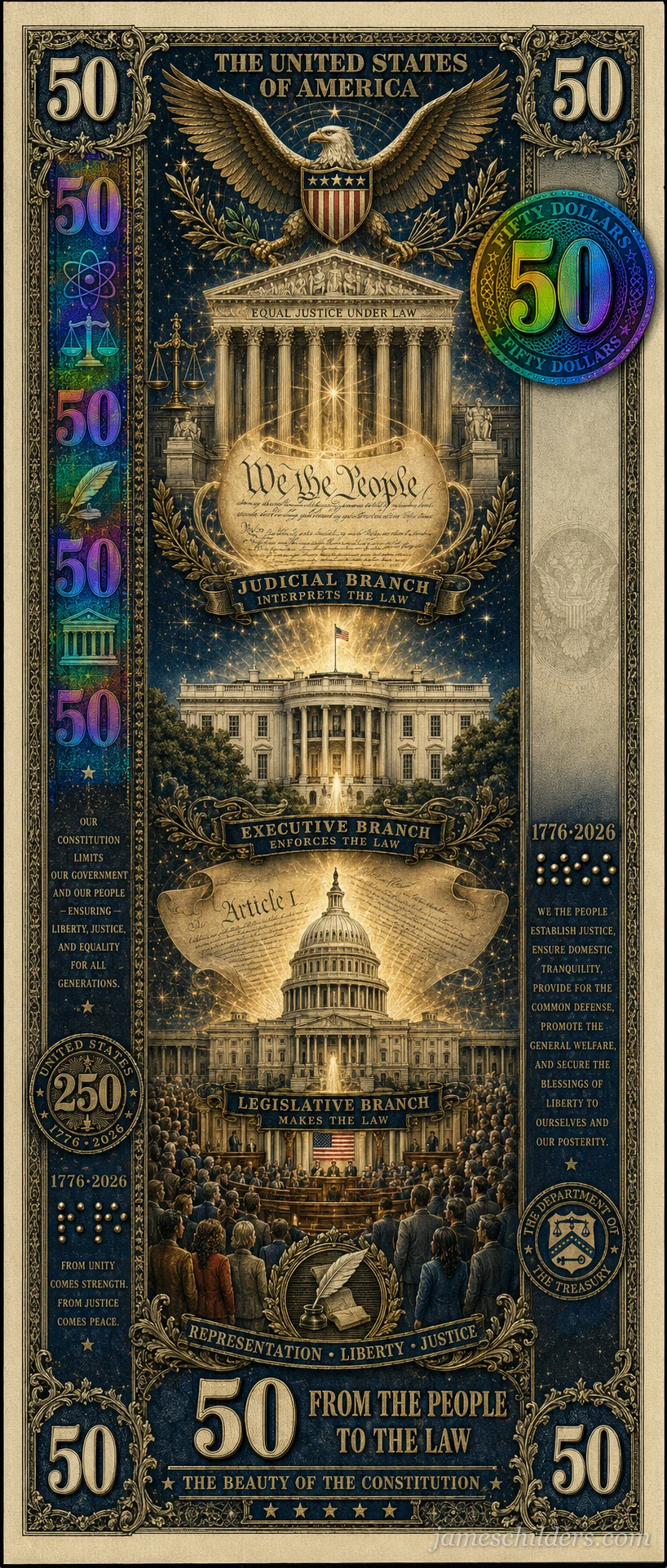
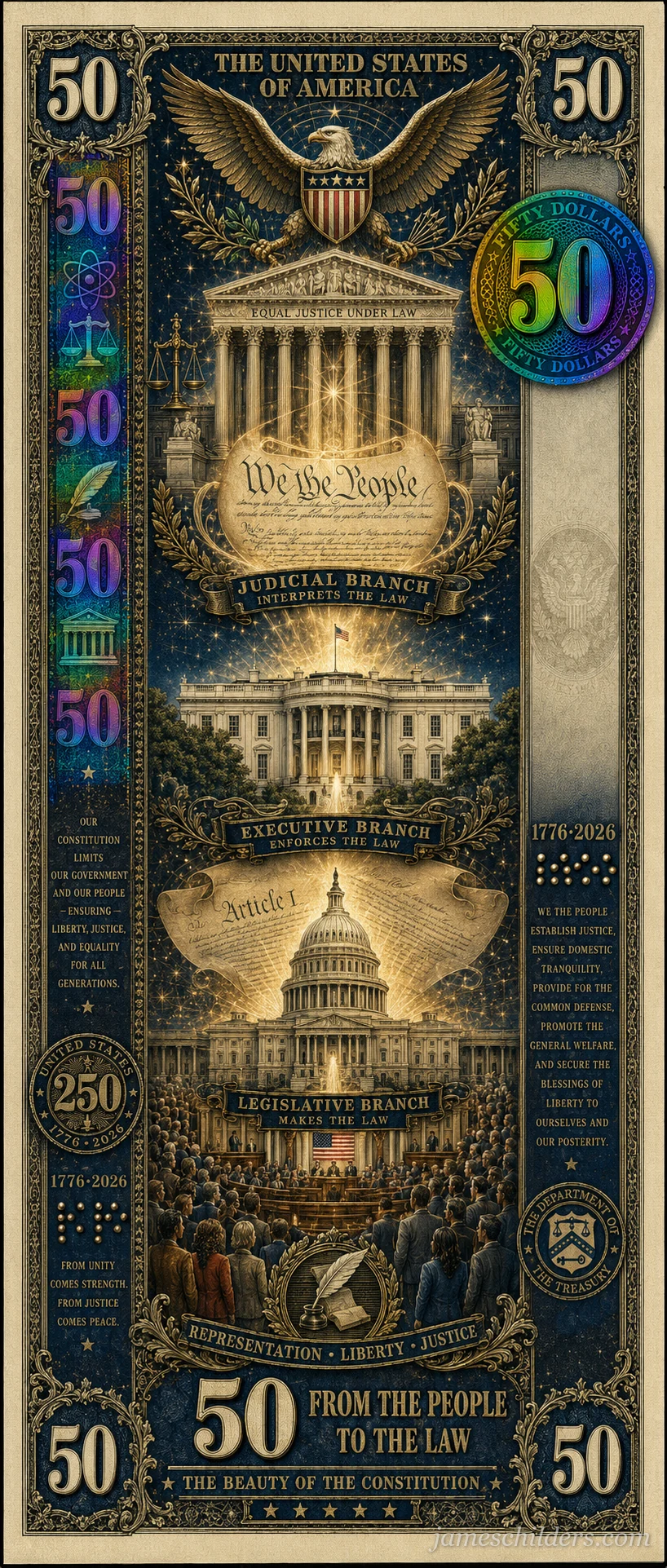
$50 Reverse - “The Framework of the Republic”
The reverse design, titled “The Framework of the Republic,” illustrates the three branches of the United States government—Executive, Legislative, and Judicial—working in tandem. The artwork depicts the White House, the Capitol Building, and the Supreme Court interconnected by foundational constitutional themes. It emphasizes constitutional principles of checks and balances, systems thinking, and the delicate equilibrium required to maintain a functioning democracy. This architectural and systemic celebration perfectly balances the technological systems honored on the obverse.
$100 Bill Concept
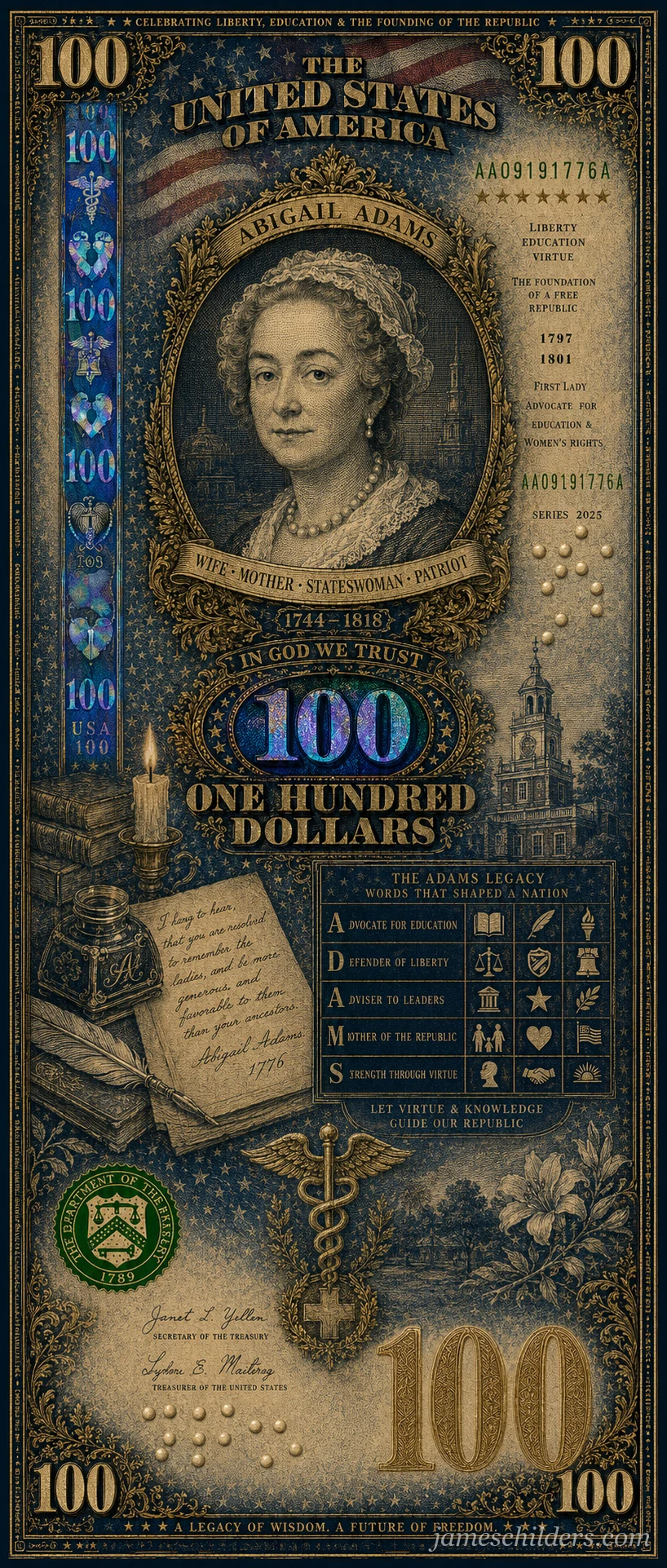
The $100 bill is the highest denomination in general circulation, serving as a global ambassador of American value. This redesign concept elevates the note to represent our highest national ideals: liberty, human dignity, and the enduring legacy of our founding principles. By focusing on figures who championed education, care, and equality, the design reflects the true wealth of a nation.
Together, these two options represent the foundational pillars of a thriving republic: the preservation of human life and the cultivation of the human mind. They remind us that true prosperity is measured by how we care for our most vulnerable and how we educate our citizens.
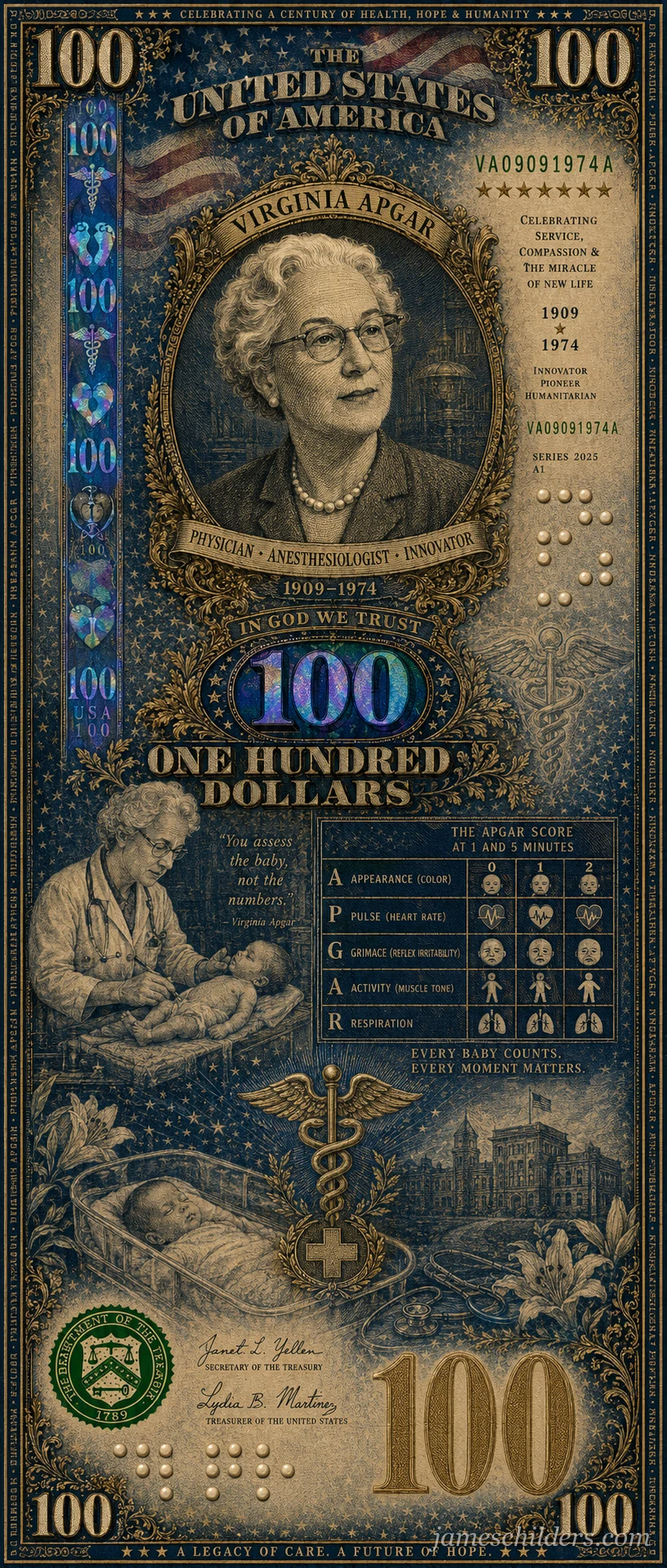
Virginia Apgar Option
Honoring the pioneering physician and medical researcher whose creation of the Apgar Score drastically reduced infant mortality worldwide. This obverse option features her portrait surrounded by medical motifs, scientific notes, and imagery representing the sanctity of human life. It celebrates the American commitment to healthcare, scientific advancement, and the fundamental dignity of every individual from their very first breath.
Abigail Adams Option
Celebrating the influential Founding Mother, brilliant political advisor, and early advocate for women's rights and education. This alternate obverse concept surrounds Adams with her historic correspondence, quill pens, and symbols of early American intellectual life. Anchored by her famous plea to “Remember the Ladies,” this design honors the foundational call for true equality and the vital role of education in a free society.
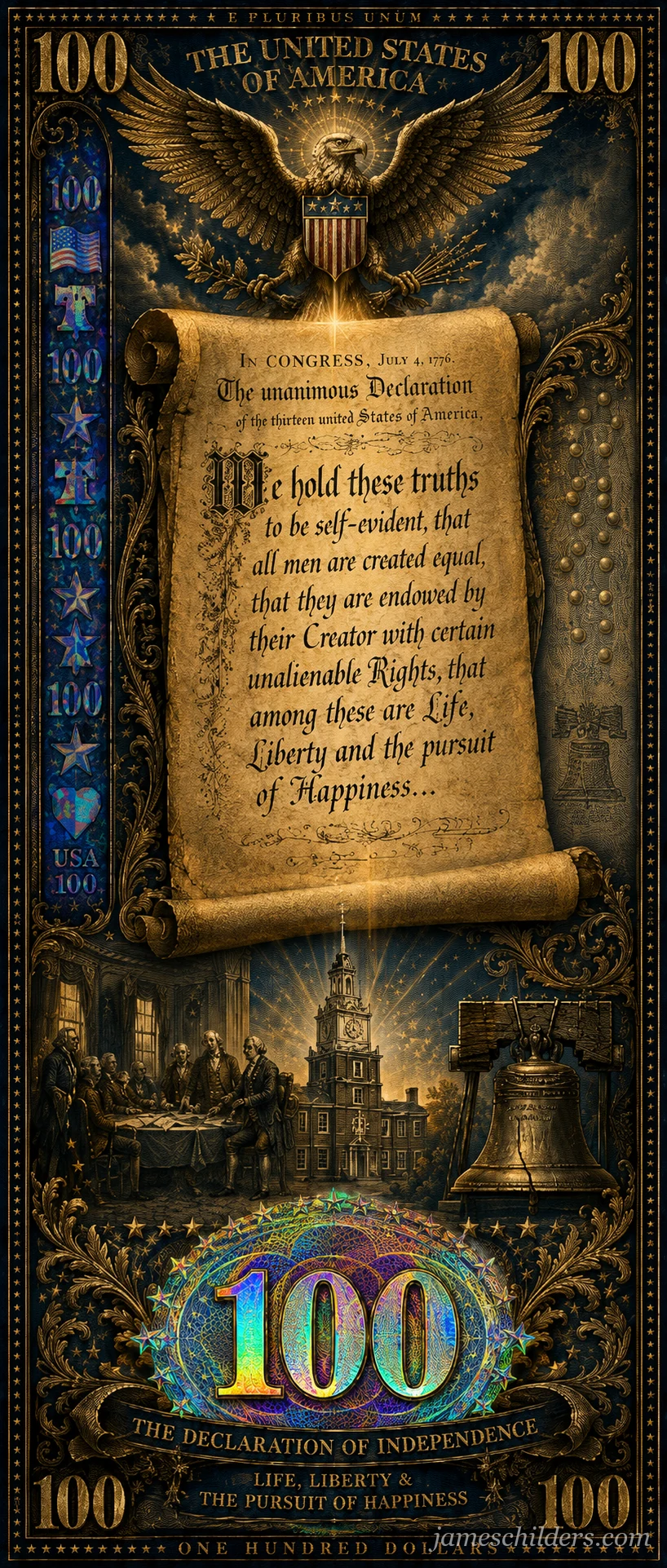
$100 Reverse - “The Declaration of Independence”
The reverse design anchors this premier denomination in the nation's most sacred text: the Declaration of Independence. The artwork depicts the historic signing, surrounded by constitutional language, soaring eagles, and robust security features. It serves as a powerful reminder that the ultimate value of the United States lies not in its currency, but in its unwavering commitment to life, liberty, and the pursuit of happiness. This monumental design ensures that the highest circulating denomination carries the highest ideals of the republic.
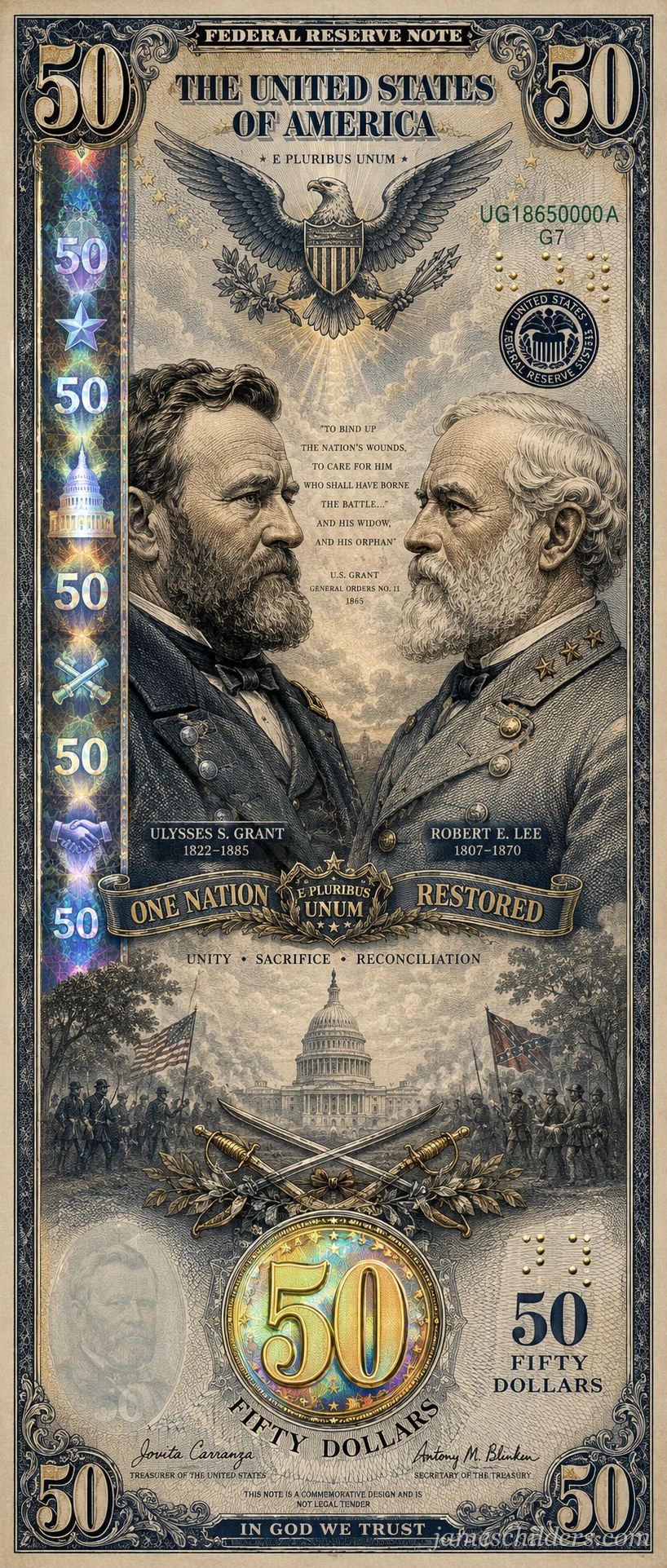
$50 Controversial Reconciliation Note
This $50 concept is intentionally controversial. It explores the idea of reconciliation by placing Ulysses S. Grant and Robert E. Lee face-to-face on the same banknote. It is a design that forces a conversation about our history, our deep divides, and the difficult, ongoing work of unity. The text reads “One Nation Restored,” acknowledging the fracture. Why design something that will make people uncomfortable? Because currency is a reflection of a nation's soul. And sometimes, the most honest reflection isn't one that hides from the conflict. Because it walks straight into it.